



In every era of human history, transformative tools have marked decisive leaps in civilization: fire gave us energy, writing gave us memory, and the internet gave us global connection. As Artificial Intelligence emerges as the defining technology of our time, a pivotal question arises — will it remain an echo of dominant cultures, or evolve into a genuine mirror of humanity in all its diversity? This blog introduces the vision of Culturally Grounded AI — a framework embedding fairness, justice, and inclusivity into AI systems — and argues that cultural grounding is not only essential for safeguarding dignity and trust, but also a strategic bridge toward Artificial General Intelligence (AGI), the next milestone in human progress.
The Historical Pattern of Human Leaps
Human civilization has consistently advanced through paradigm-shifting tools that redefined our relationship with the world and with one another.
Fire gave us energy.
Writing gave us memory.
The internet gave us global connection.
Today, we stand on the threshold of the next great frontier: Artificial Intelligence (AI). Yet, unlike past tools, AI does not simply extend human capacity — it increasingly mirrors, interprets, and reshapes our collective identity. The central question, therefore, is not only how powerful AI can become, but how deeply human it should remain.
“Just as fire gave us energy, writing gave us memory, and the internet gave us global connection — culturally grounded AI can give us the collective wisdom to build Artificial General Intelligence. Not an alien intelligence, but a mirror of humanity in all its diversity — the next great human jump.”
The Central Thesis: Culture as the Missing Link in AI Training
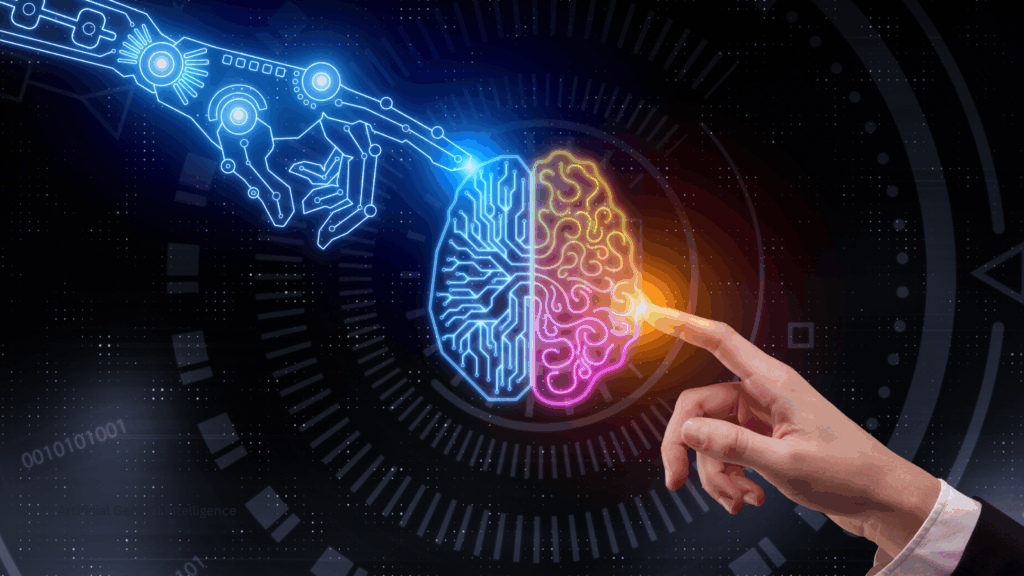
Today’s AI models are remarkable in their technical capacity, yet they remain culturally unbalanced. Trained predominantly on Western, English-language data, they tend to reproduce systemic biases, marginalize non-dominant traditions, and reduce meaning to a homogenized global “average.”
The central thesis we advance is clear:
To progress responsibly toward Artificial General Intelligence (AGI), AI must be trained fairly, transparently, and inclusively across the full spectrum of the world’s cultures.
This requires embedding languages, ethical frameworks, philosophies, oral traditions, rituals, and idiomatic expressions into AI systems — not as peripheral additions, but as structural foundations that anchor intelligence in the diversity of human experience.
A SWOT Perspective on Culturally Grounded AI
The Strengths of Culturally Grounded AI
Our analysis indicates that culturally grounded AI can offer profound advantages. At its core, it safeguards human dignity, ensuring the representation of diverse communities and preventing the erasure of marginalized voices. It strengthens trust and legitimacy, as transparent and balanced systems invite broader global adoption. By drawing from multiple epistemologies, it enriches cognitive depth, allowing AI to reason in more nuanced and contextually appropriate ways. It also enhances conflict mediation, reducing misunderstandings in diplomacy and governance by accounting for cultural context. Finally, it ignites an innovation spark, where cross-cultural blending generates new possibilities in art, policy, and design. In short, culturally grounded AI does not merely reduce harm; it expands intelligence itself.
The Weaknesses of Current AI
Despite their technical achievements, current AI models remain constrained in significant ways. They suffer from data imbalance, with limited resources dedicated to minority languages, oral traditions, or indigenous knowledge. Their pipelines are often opaque, leaving little visibility into the data and methods that shape outputs. They also demonstrate context blindness, struggling with the subtleties of honorifics, idioms, and cultural rituals. Moreover, their ethical reasoning tends toward flattened morality, averaging diverse value systems into generic “safety filters.” This exposes a simple truth: while powerful, today’s AI systems are not yet human-centered at scale.
The Opportunities if We Get It Right
If developed with cultural grounding, AI has the potential to become a civilizational asset. It could preserve endangered languages through digitization and continuous engagement. It could serve as a global educator, teaching empathy by making diverse societies and histories accessible to all. In international affairs, it could support diplomacy and peacebuilding, surfacing shared values across adversaries. It could also drive inclusive innovation, ensuring that tools, policies, and markets are authentically localized. Beyond governance, it could catalyze creativity, blending global motifs into novel forms of art, literature, and thought. Such outcomes would transform AI into a mirror and amplifier of humanity’s shared wisdom.
The Threats of Getting It Wrong
Yet, the risks of inaction are equally significant. Without cultural grounding, AI risks reproducing digital colonialism, where dominant cultures monopolize technological narratives while others are erased. It may reinforce stereotyping, misusing cultural data in ways that deepen prejudice. It could accelerate polarization, exacerbating divides between societies through unequal access and representation. Most critically, it risks producing an alien AGI — an intelligence that reflects only fragments of humanity and remains detached from its diversity. For these reasons, cultural grounding is not optional. It is a prerequisite for trust, fairness, and, ultimately, the responsible path toward AGI itself.
Table of Contents
FAQs on Culturally Grounded AI
1. Why is cultural grounding necessary for AI?
Cultural grounding ensures that AI reflects the diversity of human experiences rather than amplifying dominant perspectives. It prevents bias, safeguards dignity, and strengthens global trust in AI systems.
2. How does culturally grounded AI connect to Artificial General Intelligence (AGI)?
AGI requires adaptability across contexts and value systems. Training AI on diverse cultures develops meta-cognition and pluralistic reasoning, essential foundations for responsible AGI.
3. What risks exist if AI remains culturally unbalanced?
Unbalanced AI risks creating digital colonialism, reinforcing stereotypes, and deepening polarization. Ultimately, it could lead to an “alien AGI” — intelligent, but detached from humanity’s diversity.
4. What opportunities arise if we build culturally grounded AI?
Such AI could preserve endangered languages, enrich global education, strengthen diplomacy, localize innovation, and spark creativity. It transforms AI from a narrow tool into a civilizational resource.
5. Who should be responsible for implementing culturally grounded AI?
Implementation requires shared responsibility: governance bodies for standards, innovators for technical solutions, investors for funding, and communities as custodians of cultural knowledge. Only together can AI become a mirror of all humanity.
From Vision to Action: A Global Implementation Plan
Translating vision into practice requires a multi-actor action plan that mobilizes governance structures, innovators, investors, and communities. This framework is designed to ensure that culturally grounded AI develops as a shared global enterprise rather than a fragmented initiative.
Governance: UNESCO, Regulators, and States
At the governance level, institutions must establish a Global Council for Culturally Grounded AI to provide oversight and strategic direction. This includes the development of cultural adequacy benchmarks and dataset transparency protocols, ensuring accountability and trust. Integration into national AI strategies will be critical for mainstreaming these principles at policy and regulatory levels.
Innovators: Labs, Universities, and Startups
The innovator community carries responsibility for technical implementation. Key actions include building low-resource language models to address underrepresented linguistic communities, co-creating datasets with cultural custodians, and sharing open-source benchmarks and cultural embeddings to promote transparency, collaboration, and equitable access.
Investors: Development Banks, CSR, Philanthropy, and Venture Capital
Investors must act as enablers of scale and sustainability. A Global Cultural AI Fund should be launched to finance innovation, particularly in underrepresented regions. Investment frameworks must measure returns not only in financial terms but also as social and cultural impact (ROI), thereby aligning capital with responsible AI development.
Communities and Direct Beneficiaries
Communities remain the custodians of cultural knowledge and must be recognized as central stakeholders. Their contributions will include participatory digitization of languages and traditions, the establishment of consent and benefit-sharing agreements, and ongoing review of AI outputs to safeguard fairness, accuracy, and dignity.
Implementation Timeline
- 0–6 months: Formation of the Global Council, establishment of the seed fund, and launch of pilot labs.
- 6–18 months: Development of regional hubs, prototyping of early cultural AI systems, and compilation of initial datasets.
- 18–36 months: Policy adoption, scaling of technical platforms, and creation of a Global Cultural Data Commons.
Conclusion
This roadmap provides a shared architecture for embedding humanity’s diversity into AI development. By aligning governance, innovation, finance, and community participation, the plan ensures that the next phase of AI evolution is equitable, transparent, and globally co-owned — laying the foundation for Artificial General Intelligence that truly reflects the richness of human civilization.
Why Cultural Grounding Paves the Way to AGI

The Need for General Perspective
Artificial General Intelligence (AGI) demands more than computational capacity; it requires a general perspective — the ability to adapt fluidly across contexts, domains, and ethical systems. For AI to move beyond narrow functionality, it must internalize the diversity of human reasoning and cultural variation.
Capabilities Developed Through Cultural Grounding
Cultural grounding equips AI with foundational skills that are essential for general intelligence. First, it enables systems to navigate pluralism, accommodating different worldviews, values, and languages without collapsing them into a homogenized output. Second, it trains AI in meta-cognition, the capacity to understand not just what people think, but why they think differently across cultural contexts. Third, it fosters the ability to balance values, allowing AI to mediate tensions between ethics, interests, and cultural norms in a manner that is contextually sensitive and globally legitimate.
From Fragility to Trustworthy Intelligence
These capabilities are not peripheral advantages; they are core requirements for AGI. Without cultural grounding, AGI risks emerging as brittle, alien, and fundamentally untrusted — powerful in calculation yet divorced from human realities. With cultural grounding, however, AGI can evolve as a mirror of humanity itself, reflecting its diversity, wisdom, and shared aspirations.
A Call to the Global Community
Beyond Technology, a Civilizational Choice
The pursuit of culturally grounded AI is not merely a technical adjustment; it is a civilizational decision. At stake is whether humanity will shape Artificial Intelligence — and ultimately Artificial General Intelligence — as a fragmented reflection of dominant perspectives, or as a true mirror of our collective diversity.
A Question of Human Agency
The question before us is therefore profound: do we accept an AI that reflects only parts of humanity, or do we dare to build an intelligence that reflects all of us? The answer will determine whether AI remains a narrow utility or evolves into a shared platform of global wisdom.
Toward the Next Human Leap
Just as fire provided energy, writing preserved memory, and the internet enabled connection, culturally grounded AI has the potential to offer humanity collective wisdom. It represents the opportunity to design intelligence with dignity, fairness, and inclusivity at its core. If embraced, this vision does not simply improve technology — it propels us into the next great human jump.