

Introduction
Urdu, one of the most widely spoken languages in the world, has a rich literary heritage and a strong cultural presence. However, when it comes to the rapidly advancing technological world, Urdu faces significant challenges. While the language is deeply rooted in classical literature and poetry, it has not evolved at the same pace as other major languages in the tech era.
The adaptation of technological terminologies into Urdu has been a slow and difficult process. Unlike languages such as English, Chinese, or Japanese, which have developed extensive vocabularies for modern technology, Urdu has often struggled to find native equivalents for terms like “cloud”, “app”, “download”, and “smartphone”. As a result, much of Urdu’s tech lexicon is either borrowed from English through transliteration, which, while widely understood, lacks linguistic depth and originality.
This gap in language modernization has become more evident with the rise of digital technology and its integration into everyday life. Studies indicate that languages which fail to modernize and adapt to technological needs may risk becoming obsolete in the digital world. Urdu is no exception.
For instance, in countries like China and Japan, native languages have been successfully updated to accommodate modern technology. In China, the development of new characters and terms to describe technology has been a systematic effort by linguistic authorities. Similarly, Japan has integrated new technology terms into their existing lexicon by adapting foreign words into their native writing systems, like コンピュータ (computer) and インターネット (internet).
In contrast, Urdu continues to rely heavily on borrowed words from English, which means that native Urdu speakers may often find it difficult to fully understand tech-based concepts in their own language. While Urdu does have the capacity to adapt and absorb new words, the process of creating standardized tech-based terminology for digital technologies is still in its early stages. This is particularly evident in areas like artificial intelligence, machine learning, and speech recognition.
Thus, the AlifBot Project offers an interesting case study in understanding these linguistic challenges and underscores the urgency of modernizing Urdu to make it a more tech-compatible language in the digital age.
The Challenges of Adapting Tech Terminologies in Urdu
The AlifBot Project is a pilot initiative by Fatima AI Research Institute FAIRIST.AI that aims to help non-native Arabic speakers learn and memorize the Quran using advanced technologies like LSTM-RNN and MFCC. This project will eventually be implemented in Pakistan for its pilot phase, targeting Urdu-speaking populations. However, during its development, several challenges have emerged, primarily in the adaptation of modern technological terminologies into Urdu.
For example, terms like “app”, “cloud”, “download”, “voice recognition”, and “LSTM-RNN” were borrowed directly from English due to the absence of precise native equivalents in Urdu. While terms like “ایپ” for “app” and “کلاؤڈ” for “cloud” are widely used, they don’t always carry the same weight or meaning as their original counterparts.
The challenge is not only in translating individual terms but also in maintaining functional accuracy while keeping the translations understandable for the average Urdu-speaking user. For instance, basic terms like “connection” or “settings” were translated directly as “کنکشن” and “سیٹنگز”, but this doesn’t fully reflect their functionality in the context of technology. In AlifBot, developers were faced with decisions like whether to use English commands or borrow words in Urdu. For example:
- “Reiteration Mode”: Would it be “اعادہ موڈ” or “ریٹیر یشن موڈ”?
- “Recitation Mode”: Should it be “تلاوت موڈ” or “ریکٹیشن موڈ”?
This dilemma highlights the language gap and the struggle to maintain accuracy while ensuring that users can navigate the app intuitively.
Moreover, an interesting issue arose during translation when simple phrases like “This application is free” were input into translation tools like Google Translate and ChatGPT. The resulting translation “یہ درخواست مفت ہے” highlighted an issue in Urdu: the word “درخواست” refers to a request or application in the context of forms, but it doesn’t capture the tech meaning of the word “app”. This discrepancy shows that Urdu needs to modernize its vocabulary to keep pace with technological changes.
Case Study: The AlifBot Project and Urdu Terminology
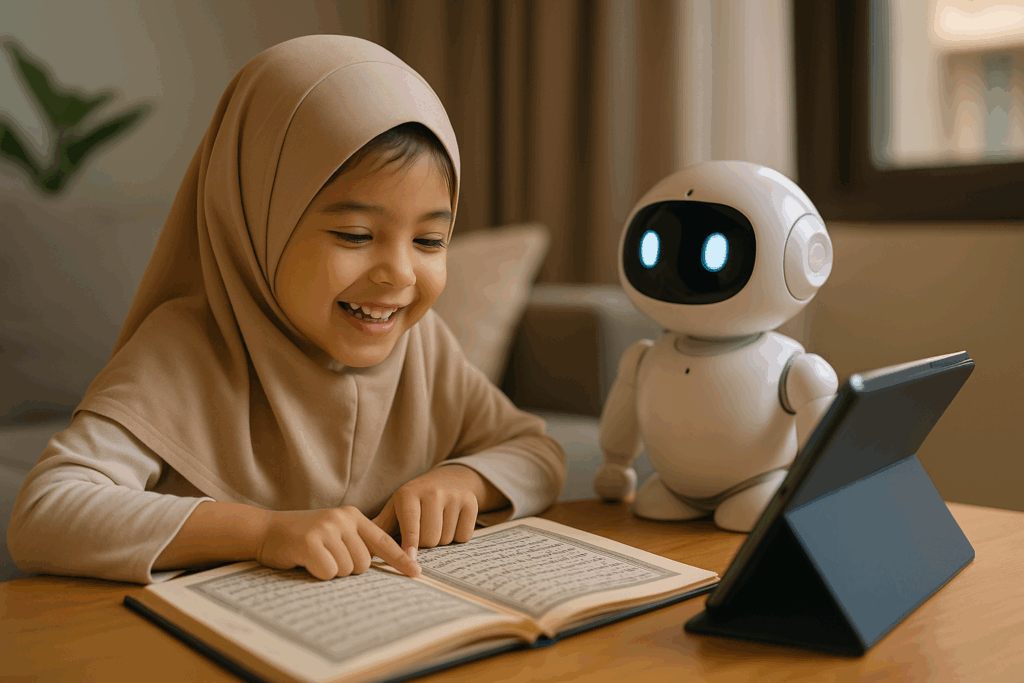
The AlifBot Project aims to develop an AI-powered app to assist non-native Arabic speakers in learning the Quran, leveraging LSTM-RNN for speech recognition and MFCC for feature extraction. In the pilot phase, the app is planned to be launched in Pakistan, where Urdu is the primary language. This presents a unique challenge for the developers: how to incorporate modern technology terms into the Urdu interface without confusing the user or losing the functionality of the app.
For instance, words like “voice recognition”, “speech feedback”, and “real-time correction” are complex and require careful translation. Translating these terms accurately while ensuring they are user-friendly in Urdu is a critical issue for the developers. Should terms like “cloud computing” be translated as “کلاؤڈ کمپیوٹنگ” or “کمپیوٹر سے جڑا حساب”?
Another issue arose while translating “Download via Wi-Fi + 3G/4G Only”: “صرف وائی فائی یا 3 جی/4جی کے زریعے ڈاؤن لوڈ کریں”—this shows the challenge of balancing Urdu’s linguistic limitations and its ability to adapt to new tech terminologies.
The AlifBot Project is still in the early stages, but these translation challenges highlight the importance of modernizing Urdu to be better suited for the tech era. The development of standardized dictionaries and consistent tech terminology for Urdu is essential for the future of digital tools aimed at Urdu speakers.
Conclusion
The AlifBot Project serves as a case study in understanding the linguistic challenges that Urdu faces when adapting to modern technologies. As Urdu-speaking communities become more integrated into the global digital landscape, the language must evolve to accommodate new technologies. Standardized tech terminologies for Urdu will facilitate clearer communication, foster innovation, and ensure that Urdu remains a relevant and accessible language in the digital age.
Efforts by Urdu Language Authorities and universities in Pakistan should focus on developing comprehensive tech dictionaries and guidelines to ensure that Urdu remains machine-readable and adaptable for future technologies. By adopting lessons learned from countries like China and Japan, Urdu can modernize its lexicon and maintain its cultural integrity while embracing the future.
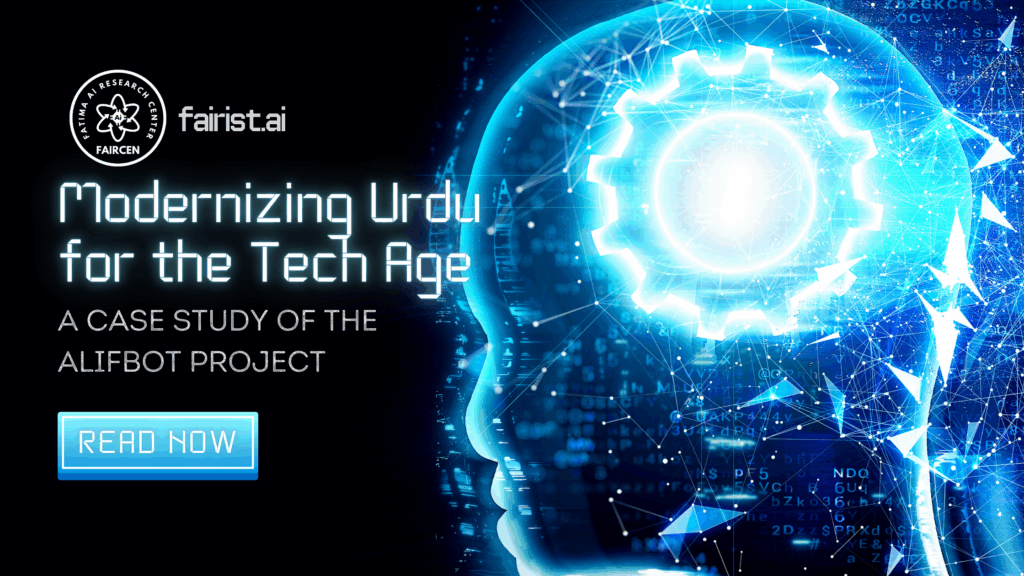
Modernizing Urdu for the Tech Age
1. Introduction
Urdu, rich in heritage, faces challenges in adapting tech terminologies, hindering its integration into the digital world.
2. The Challenges of Adapting Tech Terminologies in Urdu
The AlifBot Project faces challenges in adapting modern tech terms into Urdu, highlighting the need for language modernization in technology.
3. Case Study: The AlifBot Project and Urdu Terminology
The AlifBot Project aims to help non-native Arabic speakers learn the Quran using AI, but faces challenges translating tech terms into Urdu.
About the Author
Syed Ijaz Hamdani is an accomplished educator and consultant, currently serving as the Director of Fatima AI Research Institute. A former faculty member at Aga Khan University – Professional Development Center North, he brings a wealth of experience in academia, business development, and career consulting. As a Business Development Consultant and Certified College Consultant from the USA, Syed Ijaz Hamdani has played a key role in shaping educational pathways and providing strategic guidance to businesses seeking growth and innovation.